


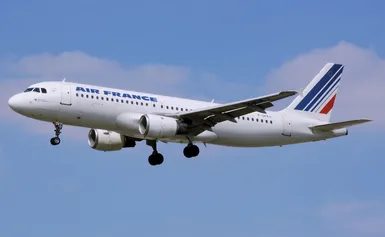
Air France flying an Airbus A320-200 is a common sight. But the machine in the sky represents something far more complex than a single manufacturer’s output. It is the result of a decades-long experiment in global supply chain management.
The story begins with Airbus Industrie. This consortium formed in 1970. The goal was simple. Fill the gap for short to medium-range jets with high capacity. By 2000, it became a subsidiary of EADS, later just Airbus. Headquarters sat near Toulouse, France.
The scale was massive. More than 50,000 people worked directly on these aircraft. They were spread across France, Germany, Spain, the UK, and China. Engineers, sales teams, and trainers operated globally. The network included over 1,500 suppliers. Cooperative agreements stretched across many nations.
American companies played a huge role. They provided about a third of all Airbus components. Partner firms handled subassembly work in their own factories. Wings came from the UK. Tail sections came from Spain.
Getting these pieces together required logistics that were anything but simple. Subassemblies moved by road, rail, barge, ship, and air. Airbus even owned special jets. The Beluga fleet transported massive parts to final assembly lines. These lines existed in France, Germany, and China.
Not all planes landed in the same place.
– A320, A330, A340, A380, and A350 models finished near Toulouse.
– Smaller jets like the A318, A319, and A321 assembled in Hamburg.
– Later expansion brought assembly to Tianjin, China, starting in 2008.
– Mobile, Alabama, joined the list in 2015.
The modern Airbus is not built in one factory. It is assembled from a global puzzle. Each piece travels thousands of miles before joining its neighbor. The result is a plane that flies efficiently because its construction process did too.
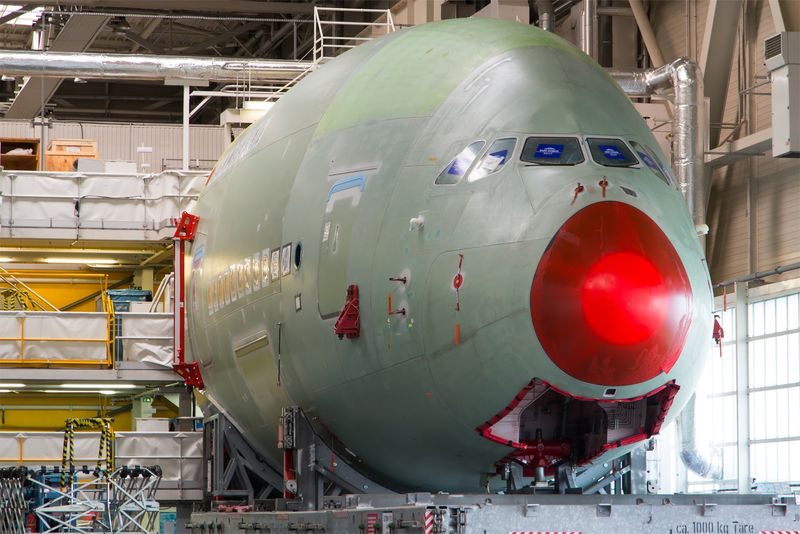

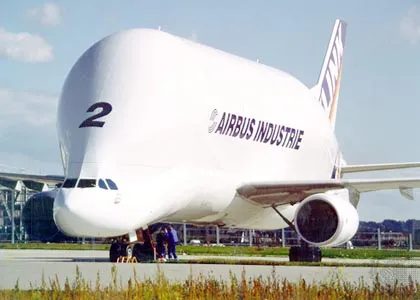

The Airbus Beluga, with its bulbous fuselage, is a specialized freighter. Its job is to shuttle massive aircraft components—like wings and fuselage sections—between Airbus production sites across Europe. It handles loads with cross sections up to 4.88 meters (16 feet) square. While it occasionally serves commercial charter clients, its primary role is logistical support for the manufacturer’s complex supply chain. But the story behind the aircraft is far more complicated than the cargo it carries.
How Airbus Was Born Out of Necessity
The Airbus program didn’t start as a triumphant corporate launch. It began in 1965. The governments of France and Germany were talking. They wanted a European consortium capable of building a high-capacity, short-haul jet transport. The goal was to challenge the American dominance in commercial aviation.
By 1966, the plan solidified. French firm Sud Aviation, an informal German group called Arge Airbus, and British company Hawker Siddeley Aviation were tasked with studying a 300-seat airliner. They were targeting the short-haul sector. But the engines required for such a beast didn’t materialize in time. The design had to be scaled back. The initial concept became the A300, a 250-seat version.
The British government pulled out in 1969. France and Germany pressed on. They signed formal articles to move into construction. Hawker Siddeley remained as a subcontractor, responsible for the wing design. In 1970, they created Airbus Industrie. It was structured as a Groupement d’Intérêt Economique (GIE). This is a unique partnership form under French law, established in 1967.
Who Owns Airbus?
Ownership shifted dramatically over the decades. Here is how the stakes were split in the early days:
- 50% France: Through Aerospatiale (later Aerospatiale Matra), formed by merging Sud Aviation, Nord Aviation, and missile maker SEREB.
- 50% Germany: Through Deutsche Airbus (later DaimlerChrysler Aerospace Airbus). Messerschmitt-Bölkow-Blohm held 65% of this stake. VFW-Fokker held the remaining 35%.
- 4.2% Spain: Construcciones Aeronáuticas S.A. (CASA) joined in 1971.
The British piece of the puzzle was nationalized in 1977. Hawker Siddeley and other firms merged into British Aerospace (later BAE Systems). They became a true partner with a 20% share in 1979.
Things got messy in 2000. All partners except BAE Systems merged into EADS. This gave EADS an 80% stake in Airbus. The GIE structure was replaced the next year by a single private enterprise: Airbus SAS. In 2006, EADS bought out BAE Systems’ 20% share. EADS rebranded as Airbus Group in 2014. Then, in 2017, Airbus Group merged with Airbus SAS. The result is simply Airbus. One entity. Complete consolidation.
Why the A300 Struggled Before It Succeeded
The A300 was designed for a specific gap in the market. It was a short-to-medium-range, high-capacity aircraft. It was also the first wide-body jetliner to use only two engines. This was a bet on better operating economics. Fewer engines meant lower maintenance costs and fuel burn.
The prototype flew in 1972. Commercial service began with Air France in 1974. The performance was excellent. So why did it sell poorly at first?
Airlines were skeptical. Airbus was a new, unproven manufacturer. They didn’t trust the consortium’s stability.
The breakthrough came in 1977. Eastern Air Lines, a major U.S. carrier, entered a leasing arrangement for the aircraft. That changed everything. It validated the plane in the most important market in the world.
The Power of Commonality
A second boost arrived in 1978. Airbus launched a program for a smaller, medium-range plane. This became the A310. It first flew in 1982 and entered service three years later.
Why did this matter? It allowed Airbus to offer a product family. Operators could choose from a range of sizes. They could optimize aircraft to specific routes. But the real advantage was hidden in the mechanics.
- Similar flight decks across models.
- Commonality of parts.
- Shared pilot training protocols.
This design and marketing approach defined Airbus. It persisted long after the A300 and A310 families were formally discontinued in 2007. The strategy of reducing complexity for the customer while maximizing internal efficiency became the company’s hallmark.
Did anyone predict that a fragile French-German partnership would eventually eclipse the American giants? Probably not. But the numbers don’t lie. The A310 wasn’t just a smaller plane. It was proof of concept for a new way of building aircraft. And that concept still drives the industry today.

The A320’s DNA: Fly-by-Wire and Family Success
The A320 wasn’t just another plane. It arrived in 1988 after being launched in 1984 with a clear mission: dominate the short to medium-haul market with technical sophistication. The big innovation? Fly-by-wire.
No more mechanical linkages between the pilot’s stick and the control surfaces. Instead, computer-based flight controls handled the inputs. This was a massive shift in aviation engineering.
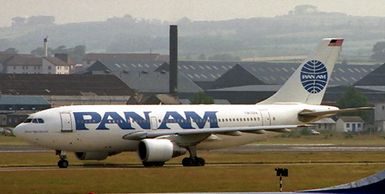
The jetliner’s success was immediate. Pan American and others bought in. The market wanted it. Airbus didn’t stop there. They built a family.
Lengthen the fuselage? You get the A321. Shorten it once? The A319. Shorten it again? The A318. Each variant shared the same core design but served different route lengths and passenger counts.
The A320 program proved that a single platform could be scaled effectively without reinventing the wheel.
This modular approach defined the narrow-body segment for decades. Competitors had to catch up. They did. But the A320 set the standard for efficiency and ease of training across variants.
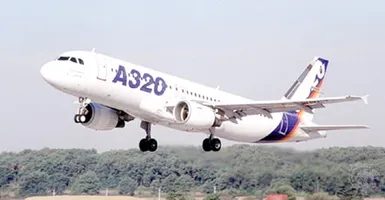

The story of Airbus isn’t just about one plane. It’s a cascade. It starts with the Airbus A320, a short- to medium-range workhorse that first took to the skies in 1987. Commercial service followed immediately in 1988. It wasn’t a giant by today’s standards. It typically held 150 passengers. But it worked. The design was so solid that it spawned an entire family of derivatives. You got the smaller A318 and A319. Then the stretched A321. Each variant kept the same core DNA. That success gave Airbus the confidence to look further out.
In 1987, the company didn’t just tweak the A320. They launched two wide-body aircraft. They used the same wing and fuselage concepts to break into the long-range market. This was a massive strategic shift.
The wide-body expansion: A340 and A330
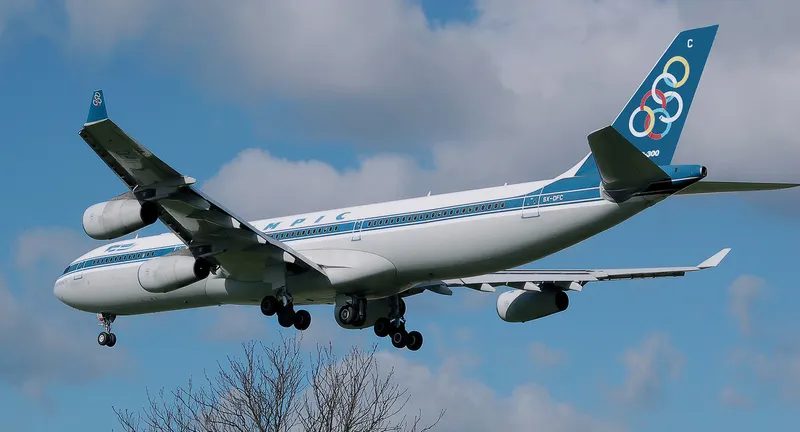
The first wide-body to roll out was the four-engine A340. It entered service in 1993. Then came the twin-engine A330 in 1994. The A330 became the real standout. It wasn’t just a passenger jet. It proved versatile. Airlines loved it. The military used it as a fuel tanker. Cargo operators turned it into a freighter. It filled a gap that Boeing hadn’t fully addressed at the time.
But Airbus wasn’t done chasing niche markets.
The A380: going bigger to go further
By 2007, Airbus aimed for the extreme. They released the A380. The “ultralong-range” moniker stuck. It was the world’s largest airliner. The design forced a complete rethink of airport infrastructure. The plane had two full-length passenger decks. Standard seating sat at 555. If you squeezed in an all-economy configuration? You could hit 853 seats. That’s a lot of bodies in the sky. It was a statement of engineering capability. Whether it was an economic statement? That’s debatable. The market eventually moved away from huge hub-and-spoke models toward point-to-point travel.
The A350: efficiency over size
The industry course corrected again. In 2012, final assembly began on the A350. This wasn’t about capacity. It was about economy. The goal was simple: fly long distances with minimal environmental damage. The engineering choices reflected that. Airbus used new fuel-efficient Rolls-Royce engines. The airframe itself was a study in lightweight materials. Titanium. Aluminum. Carbon-fiber-reinforced plastic. The mix reduced weight without sacrificing strength.
This shift marked a clear departure from the brute-force approach of the A380. It showed a maturity in design philosophy.
The A350 wasn’t just an upgrade. It was a response to fuel prices and environmental regulations.
The A320 started it all. A simple, effective tube. The A380 tried to dominate space. The A350 focuses on efficiency. The trajectory is clear. Airbus learned that

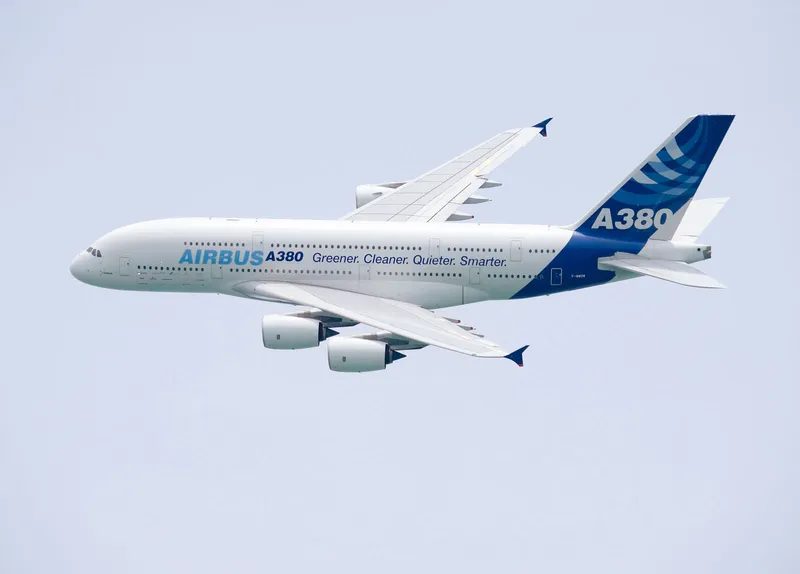

The Airbus A380 was a marvel of engineering. It dominated the skies with its double-decker bulk, capable of hauling 853 passengers in a single trip. You saw it in action at the 2008 Singapore Airshow, a massive demonstration of what happens when you stop worrying about margins and start building for volume. But the A380 wasn’t just about carrying people. It was the end of an era for how European aerospace was financed.
In those early days, the playbook was simple. Governments stepped in. The member states provided program-launch aid in the form of repayable loans. This cash covered the crushing costs of research and development for each new plane. The state absorbed the risk. The fraction of the cost carried by public funds shrunk over time. Then, the shift happened.
By 1989, the strategy flipped. With the A321, the model changed completely. No more government handouts for R&D. Airbus projects were financed through internally generated cash flow. They looked to external commercial sources for the rest. It was a move toward self-sufficiency.
This financial independence allowed for rapid diversification. In 1997, Airbus did what Boeing had done before it. They expanded into the high-margin business jet market. The launch was the Airbus Corporate Jetliner. It wasn’t a new airframe from scratch. It was based on the A319. A smaller plane. A different customer. But a profitable one.
Two years later, the structure expanded further. The Airbus Military Company was formed as a subsidiary. The goal was specific: develop a military transport aircraft. The result was the A400M.
The Shift to Commercial Financing
Why did the funding model change? The early years relied on state aid to survive development costs. It was a way to compete with American giants backed by different industrial policies. But carrying that debt became inefficient.
Starting with the A321 program, the calculus shifted. Internal cash flow became the primary engine. External commercial loans filled the gaps. This removed political volatility from the balance sheet. It also aligned the company’s survival with its market performance, not government budgets.
This self-funding capability paved the way for strategic moves. The 1997 entry into the corporate jet segment required capital that wasn’t tied to passenger airline cycles. The A319-based Corporate Jetliner offered a lower-risk entry point. It leveraged existing technology.
Then came the military sector. The formation of the Airbus Military Company in 1999 created a dedicated subsidiary. The A400M project needed a different operational framework than civil aviation. Keeping it separate protected the core business. It also allowed for specialized defense contracting.
Diversification Beyond Passenger Liners
The A380 remained the flagship. But it wasn’t the only revenue stream. The corporate jetliner captured a niche market. Governments and CEOs needed privacy. They didn’t want 500 other passengers. The A319 modification provided that. It was a high-margin product.
The military transport added another layer. The A400M was not a passenger plane. It was a logistics platform. The subsidiary structure meant different regulatory hurdles. Different funding streams.


