


Let’s be clear. Your backcountry sleep system determines your next day’s hiking ability more than any other gear choice. Shivering all night ruins everything. You need insulation from the cold ground and enough cushion to keep your hips from aching.
For years, the outdoor industry lied to us about R-values. Now, thanks to ASTM standardization, we actually have a way to compare brands. It’s still not perfect. But it’s a start.
Here is how you pick the right pad for your body, your budget, and your destination. And no, you shouldn’t blow into your pad with your mouth. Ever.
How to Read R-Values (Without Going Crazy)
An R-value measures thermal resistance. Higher number equals more warmth.
The old days of made-up metrics are gone. If a brand cites ASTM (or ASTM FF334), the number means something. If not, ignore it.
- R-1 to 2: Summer only. Warm weather.
- R-2 to 4: Three-season. Spring, summer, fall in temperate zones.
- R-4 to 5: Four-season capable. Can handle cold ground in late fall or early spring.
- R-5+: Winter camping. Snow camping requires serious insulation.
The Cold Reality: Most sleeping bags assume you’re using an R-5 pad. If you use a lower R-value pad with a 30°F bag in freezing temps, you will be cold. The math doesn’t work. The gap in your sleep system kills warmth.
Women generally run colder. You have less body mass. Add roughly 1 R-value to your standard choice to get the same warmth a man might feel.
Nemo Tensor All-Season: The Sweet Spot
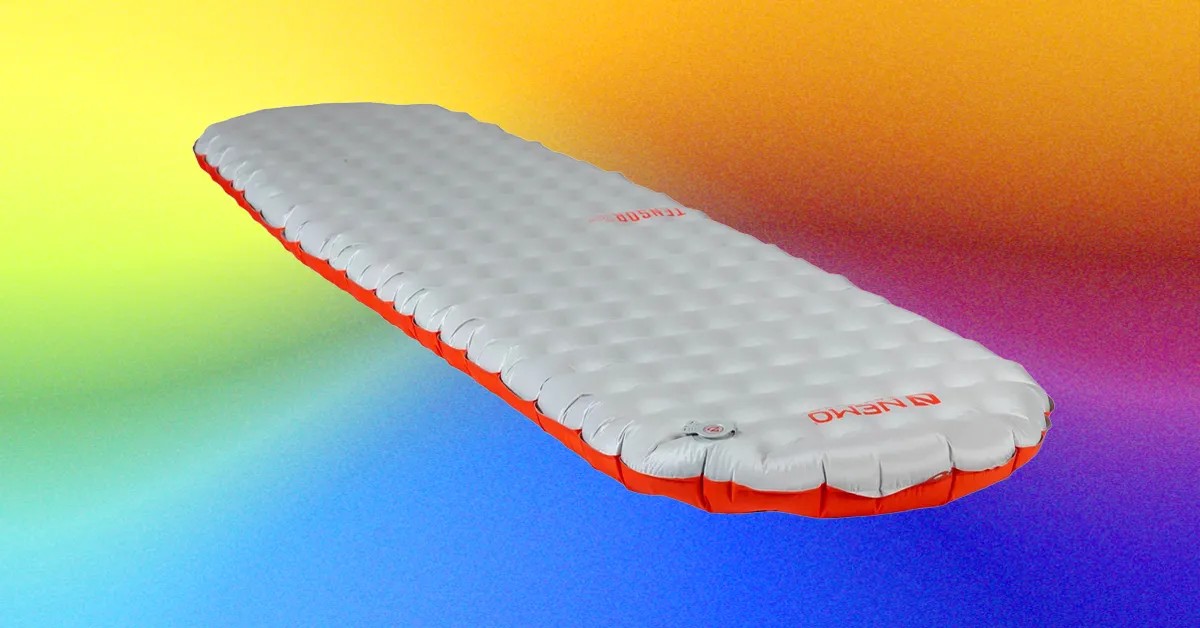
Nemo’s Tensor All-Season Sleeping Pad sits in the middle of the Venn diagram. Warmth. Comfort. Weight. It doesn’t excel at just one; it balances all three.
It weighs 18.2 ounces. The R-value is 5.4. That’s the best R-value-to-weight ratio I’ve tested in years.
It’s thick. It’s comfortable. It’s quiet. I hate the crinkly “swish” of cheap nylon when you roll over. The Tensor uses a double layer of reflective film and a baffled air chamber to kill the noise. It doesn’t sound like a chip bag at 3 a.m.
I’ve used the regular wide version for over a year. It handles almost any trip. For snow nights, I pair it with a thin closed-cell foam pad. It rolls down small—about the size of a Nalgene bottle.
If you want to save weight, the Nemo Tensor Trail exists. It weighs 16 ounces. But the R-value drops to 2.8. For ultralight trips, the Therm-a-Rest XLite below might be better. But honestly? For most people, the extra comfort of the All-Season version is worth the two extra ounces.
- R-Value: 5.4
- Weight: 16 oz (Regular)
- Sizes: Regular, Regular Wide, Regular Mummy, Long
Therm-a-Rest XLite: The Ultralight King
The Therm-a-Rest XLite is the gold standard for weight weenies. It delivers a decent night’s sleep while staying under a pound.
At 3 inches thick, it protects you from the ground. In three-season conditions, it’s warm enough. You lose an R-value point compared to the Nemo Tensor. But you save 6 ounces. When you’re shaving grams, every ounce matters.
The mummy shape is efficient. It leaves your arms hanging off if you sleep on your back or stomach. Get the Max version if you’re wide. But that adds weight and costs more.
The latest version uses a new valve. I still prefer the Flextail micro-pump. The sack included with the pad works, but the pump is faster and doesn’t require you to inhale your own breath.
There is a complaint about popped baffles. Most reports come from thru-hikers putting 500+ nights on the gear. I’ve got 100 nights on mine. Zero issues. My main gripe? It’s loud. Newer models are quieter, but they still crinkle more than the Nemo. For the weight, though? Nothing beats it.
- R-Value: 4.5
- Weight: 13 oz (Regular)
- Sizes: Short, Regular, Wide, Large
Therm-a-Rest NeoLoft: Comfort Over Weight
Some people prioritize sleep over shaving grams. For them, there is the Therm-a-Rest NeoLoft.
It weighs 25 ounces. It’s not light. But it inflates to a massive 4.5 inches. It feels like a luxury hotel mattress in the backcountry.
The vertical side walls offer pressure relief. If you’re a side sleeper, this pad is a dream. You won’t bottom out. The horizontal baffles are triangular, layered with stretchier fabric to absorb impact. The top is stretch-knit. It cuts down on the swishy sound. It makes using a quilt much more comfortable than a bag.
The R-value is 4.7. Conservative. I tested it at 15°F and was fine. But I sleep hot. If you’re a cold sleeper, this might run cool.
It’s the most comfortable pad I’ve used. If you hate the ground, buy this. Just accept the pack weight.
- R-Value: 4.7
- Weight: 25 oz (Regular)
- Sizes: Regular, Wide, Large
Exped Ultra 6.5: My Top Pick for 2026
The Exped Ultra 6.5R is my favorite pad this year. It revamps the older Exped 5R. Better insulation. Less weight.
I sleep every which way. The Exped’s vertical baffle design is superior for side sleepers. Horizontal baffles can leave gaps next to your hip. Vertical baffles hug the body. They relieve pressure points where it counts.
The listed R-value is 6.9. It feels generous. In testing, it handled below-freezing temps comfortably. One night at 24°F, I was toasty. Below that, I’d add a foam layer.
The medium-wide version weighs 19 ounces. It’s 3.5 inches thick. The comfort-to-weight ratio is fantastic. The only downside? The outer shell is 20D尼龙 (nylon). It’s incredibly light. But it might wear out faster than the 40D fabric on other pads. I’ve only tested it briefly. Long-term durability is a question mark.
For pure cold weather, this pad competes with bulkier car camping mats. But if you just need reliable three-season warmth, it’s hard to beat.
- R-Value: 6.9
- Weight: 16 oz (Regular Mummy)
- Sizes: Medium, Medium Wide, Long
Nemo Tensor Extreme: Warmth That Packs Small
Need winter warmth without the bulk? The Nemo Tensor Extreme Conditions pad has the highest R-value we’ve tested.
It rivals car camping pads like the Exped MegaMat in warmth. Yet it packs to Nalgene size. It weighs 21 ounces. How? Nemo packed four sheets of metalized thermal film inside the trapezoidal chambers.
The film reflects body heat. It stops radiant heat loss into the snow. It’s light. It’s thin.
I was skeptical at first. Heavy films usually mean bulk. But this works. If you are venturing into cold conditions, this pad offers serious protection in a small package.
The Maintenance You Can’t Ignore
You don’t need to be perfect. But you do need to maintain your gear.
Don’t inflate with your mouth. I know it’s tempting. But your breath is moist and warm. Injecting that into nylon creates mildew and mold risk. It’s also painful. Use a pump sack. Or a Flextail pump. It weighs almost nothing and takes seconds.
Don’t over-inflate. A taut pad doesn’t mean it’s warmer. It might just be thinner. Inflate until firm. Let out some air. Lie down. Find the sweet spot. If you’re a side sleeper, you might need less air to prevent bottoming out. Back sleepers can handle higher pressure.
Carry a patch kit. Most pads come with one. I don’t. I carry a roll of Tenacious Tape. It costs six bucks. It fixes rips in pads and tents alike. Test a small piece on your pad first. Make sure the adhesive sticks. Bring an alcohol wipe to clean the surface before applying.
Know thyself. Everyone sleeps differently. Are you a side sleeper? Go thick. Do you toss and turn and sleep hot? Go ultralight and quiet. Do you sleep in Michigan in October? You need a high R-value. The Everglades in August? You just need a pad that doesn’t slip.
The ground is hard. The air gets cold. Your pad is your shield. Pick the right one. Sleep well.


