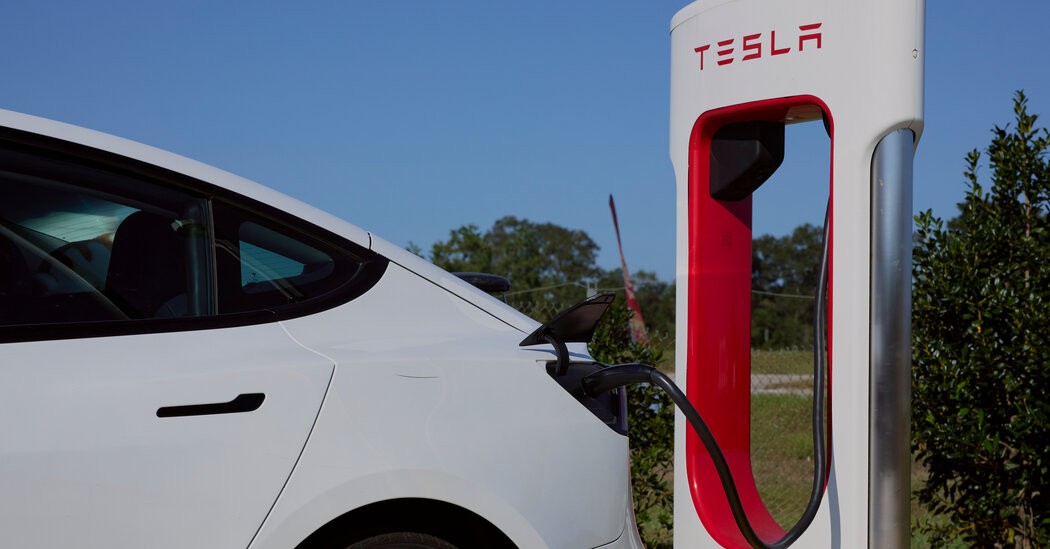
Tesla’s annual profit has dropped sharply, but the market reaction suggests investors are prioritizing long-term potential over immediate financial performance. The electric vehicle (EV) giant reported a net profit of $3.8 billion for the year, a significant decrease from $7.1 billion in 2024, as price cuts aimed at countering rising competition from both legacy automakers and Chinese rivals weighed on earnings.
Growing Competition Erodes Market Share
Tesla faces increasing pressure from established players like Volkswagen, which now outsells Tesla in Europe, and the rapid ascent of Chinese manufacturer BYD. BYD has already overtaken Tesla as the world’s largest EV producer, a shift that underscores the intensifying competition within the industry.
Financial Results Detail Weakening Performance
The fourth-quarter profit fell to $840 million, down from $2.1 billion in the previous year. Revenue decreased by 3 percent to $94.8 billion, though growth in large battery sales for energy storage partially offset declines in automotive revenue. This marks the second consecutive year of declining profits for Tesla, a trend that would typically alarm investors in traditional automotive companies.
Why Investors Aren’t Panicking
Despite the financial downturn, Tesla shares rose in after-hours trading. This counterintuitive response highlights how investors value Tesla differently than conventional automakers. Instead of focusing solely on current earnings, shareholders are betting heavily on Elon Musk’s ambitious vision for future technologies.
The Future Drives Valuation
The core of investor confidence lies in Musk’s promises of dominance in self-driving taxi networks and advanced robotics. The belief that Tesla will revolutionize transportation and automation overshadows immediate profitability concerns. This future-oriented valuation strategy is a key differentiator for Tesla, allowing it to maintain high market capitalization despite weakening financial results.
In conclusion, Tesla’s profit decline is overshadowed by investor faith in its long-term technological ambitions. The company’s stock performance demonstrates that the market values disruptive potential over short-term financial metrics, positioning Tesla as a technology company rather than a traditional automaker.