


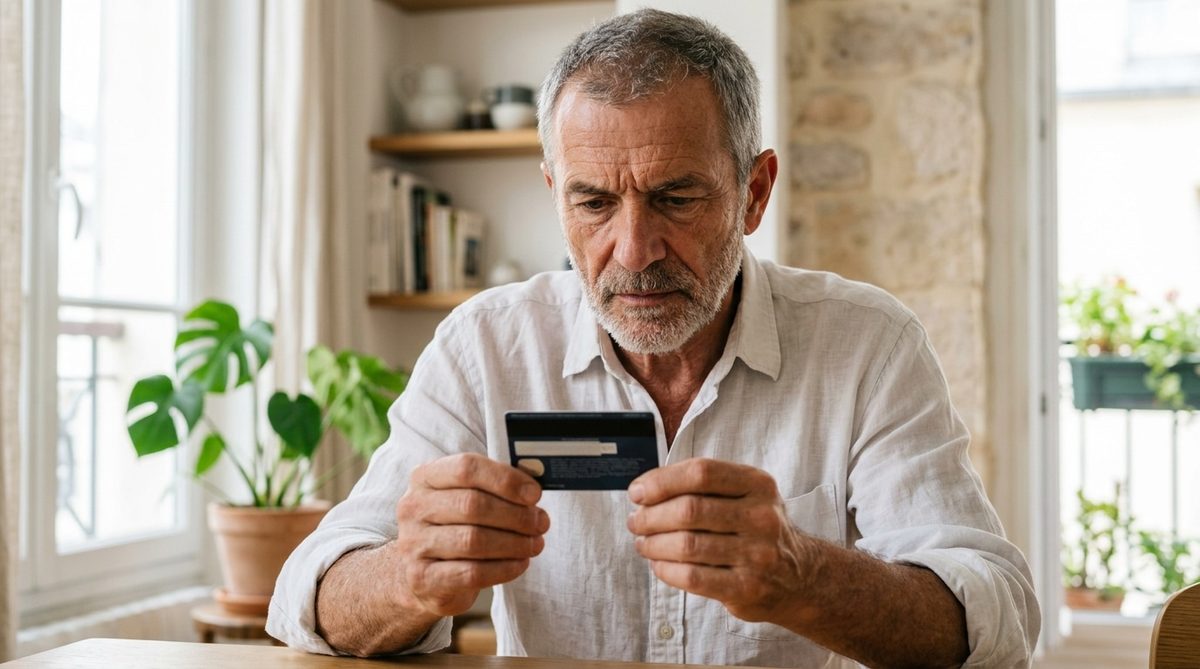
Technology promises a frictionless life. We are told that complex passwords and memory burdens will vanish, replaced by sleek, intuitive hardware. But biology has a way of interrupting that narrative. This summer, a quiet revolution is slipping into wallets: the bank card with a built-in fingerprint sensor. It positions itself as the direct successor to the four-digit PIN. It claims to be a massive time-saver. On paper, it looks perfect.
There is a catch.
A significant technical flaw means nearly one million people—mostly seniors—could be permanently locked out of this payment system. We are rushing toward innovation while leaving a large slice of the population behind. Is it really progress if it demands exclusion?
How fingerprint payments remove transaction limits
Contactless payments already sped up checkout lines. Now, biometric cards are pushing that boundary further. The concept is simple. You press your finger firmly against a small reader embedded in the card’s edge. You then tap the card against the terminal. The magic happens in the details.
Unlike standard tap-to-pay transactions, which freeze at €50, biometric authentication removes the ceiling entirely. You can buy anything. No need to enter a PIN for larger sums. The security model is robust. Your fingerprint is converted into a mathematical model. That data is stored inside an impenetrable chip on the card itself. Neither the merchant nor your bank keeps a copy of your biometric data in a central server. The card is also battery-free. It draws power directly from the magnetic field of the payment terminal. Retailers validated this technology last spring, aiming to make daily spending as clean and decisive as a sharp snip of garden shears.
The benefits are clear:
- No spending caps: Any amount can be paid with a single gesture.
- Self-powered operation: The card harvests energy from the terminal, so there are no dead batteries.
- Private storage: Your biometric details never leave the card or circulate on public networks.
The biological barrier: why smooth skin blocks transactions
Behind the shiny veneer of modern convenience lies a hard biological wall. About 5% of the population has fingerprints that current scanning chips simply cannot read. Gardening nurtures the soul. Manual labor does not. Prolonged physical work and inevitable aging alter the human epidermis in irreversible ways. As skin ages, it dries out. The tiny ridges that make up a fingerprint flatten. This makes identification nearly impossible for precision machinery.
Apply those statistics to the French demographic of over-60s. We are looking at 985,000 seniors who face repeated authentication failures at checkout counters. It is not just age. Recurring dermatological issues like eczema or side effects from medications disrupt the signal sent to the electronic component.
Banks are aware of this glitch. Some allow customers to register two different fingers—like the right thumb and the left thumb—to create a backup. But for someone suffering from natural skin wear, the promise of fluid consumption turns into seconds of awkward delay at the supermarket register. You stand there. The terminal blinks. The reader fails. Again.
Where does this leave the unregistered?
The question isn’t just about convenience. It is about access. If the primary method of payment excludes 5% of adults, how do they transact? Do they carry cash? Do they rely on someone else? The shift to biometrics assumes a uniform biological standard that doesn’t exist.
The technology works for the majority. It is faster. It is theoretically more secure because the data never leaves the device. But for the quarter-billion people worldwide whose skin doesn’t cooperate, the future is already a locked door. We optimized for speed. We forgot to test for texture.
The result is a divide. On one side, a seamless digital flow. On the other, a wall of dried skin and error messages. The industry calls it an upgrade. Users with rough hands call it a barrier. The terminals don’t care. They just reject the input. And the line keeps moving.
Why Passwords Are Still Your Only Safety Net
Biometric scanners are not magic. They fail. Frequently. And when they do, you are left standing at the register with a declined transaction and zero backup plan. This is why maintaining a strong, encrypted password is not a nostalgic habit. It is an absolute necessity.
The hardware has limits. If your phone’s fingerprint sensor rejects your finger on a dry, cold day, a tiny plastic card with a chip embedded in it will perform even worse. The physics of miniaturization do not favor reliability in harsh conditions. But the bigger issue is not convenience. It is the specific type of fraud these devices claim to stop.
Biometric hardware protects against physical theft. If someone steals your wallet, they cannot easily buy things with your finger. But that is a shrinking threat vector. Most scams targeting vulnerable populations—especially the elderly—do not happen in retail stores. They happen online. They happen via phishing emails. They happen via SMS code interception. No amount of finger scanning stops a hacker from tricking you into handing over your credentials.
“Biometric hardware fills the gap for physical theft, not digital extortion.”
Consider the cost. Some older biometric payment solutions or premium security tiers have charged over €100 annually. That is a heavy levy for a feature that may not even work for everyone. Before you buy into the hype, ask yourself what you are actually paying for. You are paying for a convenience feature that adds a layer of friction when it fails. And it will fail.
There are millions of people whose hands do not match the algorithm. Skin that is too dry. Scars from years of work. Warts. Age. These are not anomalies. They are realities. For these users, the “modern” payment method is a barrier, not a bridge. They must fall back on the password. Always.
The industry promises a future where biology seamlessly integrates with finance. It is a pretty promise. But the current technology is exclusionary by design. It assumes a standard set of fingerprints that most of the population does not possess. Until sensors can adapt to the full diversity of human skin conditions—without requiring a manual override—the password remains the great equalizer. It is the only tool that works for everyone, regardless of how their hands look or feel.
We are moving toward a cashless future. But we are not moving toward a frictionless one. The friction is just shifting from cash handling to identity verification. And for those on the outside of the biometric ideal, that friction is permanent.
The real question is not whether we can make fingerprints work better. It is whether the industry will ever accept that they might never work for everyone. Until then, keep your password strong. Keep it written down if you have to. Do not let the allure of the new make you vulnerable to the old.


