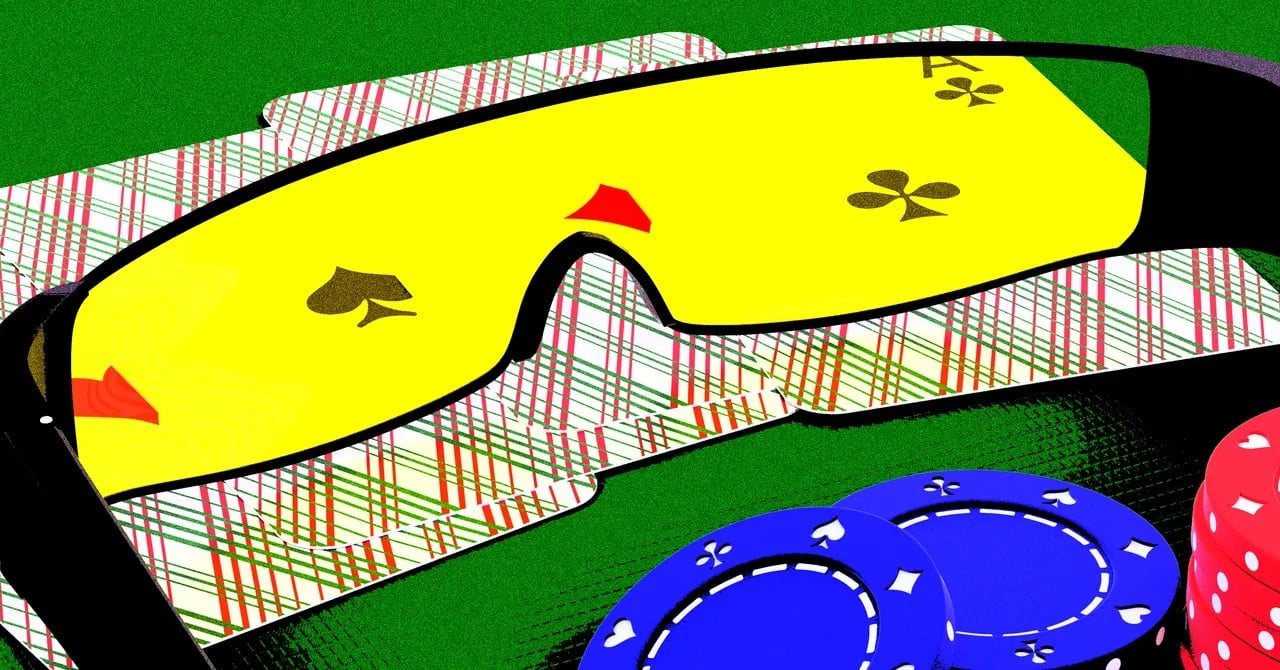
ESPN’s 2026 World Series of poker Main Event broadcast tried to sell us on a new dream: artificial intelligence that reads minds.
At least, that’s what they implied.
A text overlay popped up on screen. It showed live metrics of player movements. It displayed a “hand strength model.” The data supposedly broke down probabilities based on a player’s “tells”—subconscious tics like blinking, posture, and chip handling. The message was clear: AI could see what you couldn’t.
It looked slick. It felt futuristic.
It also didn’t work.
The poker community reacted with a mixture of skepticism and outright dismissal. Why? Because telling a bluff is hard. Really hard. And a camera lens doesn’t have the intuition required to make the call.
The Data Gap Problem
The tool was built by Luke Geel, an AI engineer with US Air Force background. His system digitizes the old-school art of tell detection.
Geel’s algorithm analyzed every hand captured on camera during the first few days of the July broadcast. It built a database. It looked for patterns in eye movement. It measured breathing. It tracked fidgets. Then, it predicted if a player had a strong hand, a draw, or was bluffing.
The problem? The sample size was tiny.
The 2026 WSOP attracted over 9,000 players. Most of them never sat at the three tables that were televised. The AI was trained on camera feeds from those specific tables.
Michael Gagliano knows this firsthand.
Gagliano is a 17-year pro who reached the final table, playing for $10 million. He says the broadcast streams were varied. Players didn’t appear frequently. There wasn’t enough consistent footage of any single opponent for the AI to build a robust profile.
“I don’t know how much actual information I’m going to be able to act on,” Gagliano says.
If a human pro can’t spot tells due to limited screen time, an AI faces the exact same constraint. You can’t train a model on sporadic data and expect accurate predictions.
It’s Not Just an Oreo Crumb
Pop culture loves poker tells.
The 1998 movie Rounders immortalized the trope. Matt Damon’s character loses because John Malkovich eats Oreos. The gangster reveals his confidence through a specific, repetitive action. It’s cinematic. It’s clean.
Real poker is messier.
Shaun Deeb, a two-time WSOP Player of the Year finalist, points out that physical tells are far more complex than eating snacks.
“There are leg tells, checking tells, verbal telling, breathing tells, pulse tells,” Deeb says. “An insane amount of tells are available. Most can’t be picked up by a camera.”
A camera sees pixels. It doesn’t feel intent.
It might see a player sweating. It might see a player shaking. But it can’t distinguish between the nervousness of holding a weak hand and the adrenaline of playing a high-stakes environment.
Context is Everything
Consider two pair.
To a novice, two pair is strong. To a pro, two pair might be weak in the context of the board and the betting pattern.
“Maybe someone is extra confident with a hand… that’s actually weak for the situation,” Gagliano explains.
Or consider the player who knows they have two pair. They are nervous because it’s the Main Event. Their body language screams anxiety. Is it fear? Or is it respect for the pot size?
AI sees the anxiety. It misses the context.
It correlates movement with hand strength without understanding the game state. That correlation is flawed. Confidence isn’t always power. Nervousness isn’t always guilt.
A Swing and a Miss
Geel, the creator, isn’t claiming godhood.
He told WIRED that larger datasets are needed. He admits his blind tests on other competitions yielded mixed results. The tool was designed for entertainment, not professional advice. It’s a party trick for the living room.
But even as entertainment, it feels forced.
Deeb isn’t impressed.
“I think they randomly found something to try and make it like another sport,” Deeb says. “I just think it was a swing and a miss.”
The tool appeared in July broadcasts. It did not make it to the final table.
Omaha Productions, the licensed producer for ESPN’s WSOP coverage, confirmed the AI was excluded from the finale. They declined to explain why.
Maybe it was obvious. Maybe the data was garbage. Maybe the network realized that showing false precision on live television was a bad look.
The Future of Detection
AI will improve. It always does.
In the high-roller scene, where buy-ins hit six figures, hundreds of hours of footage exist. Pros study streams daily. They look for patterns.
Could better AI optimize this process?
Maybe.
But for now, the human element remains dominant.
Deeb coaches players deep into tournaments. His process includes hiring live tells specialists. He doesn’t just watch cameras. He watches people. He has friends sitting in the room, observing both opponents and his client. They look for glaring tendencies. They adjust in real time.
There is no algorithm for that kind of presence.
The AI at the WSOP tried to replace instinct with data. It failed because poker isn’t just data. It’s psychology. It’s deception. It’s the human ability to read another human under extreme pressure.
You can count a blink. You can’t always trust what it means.