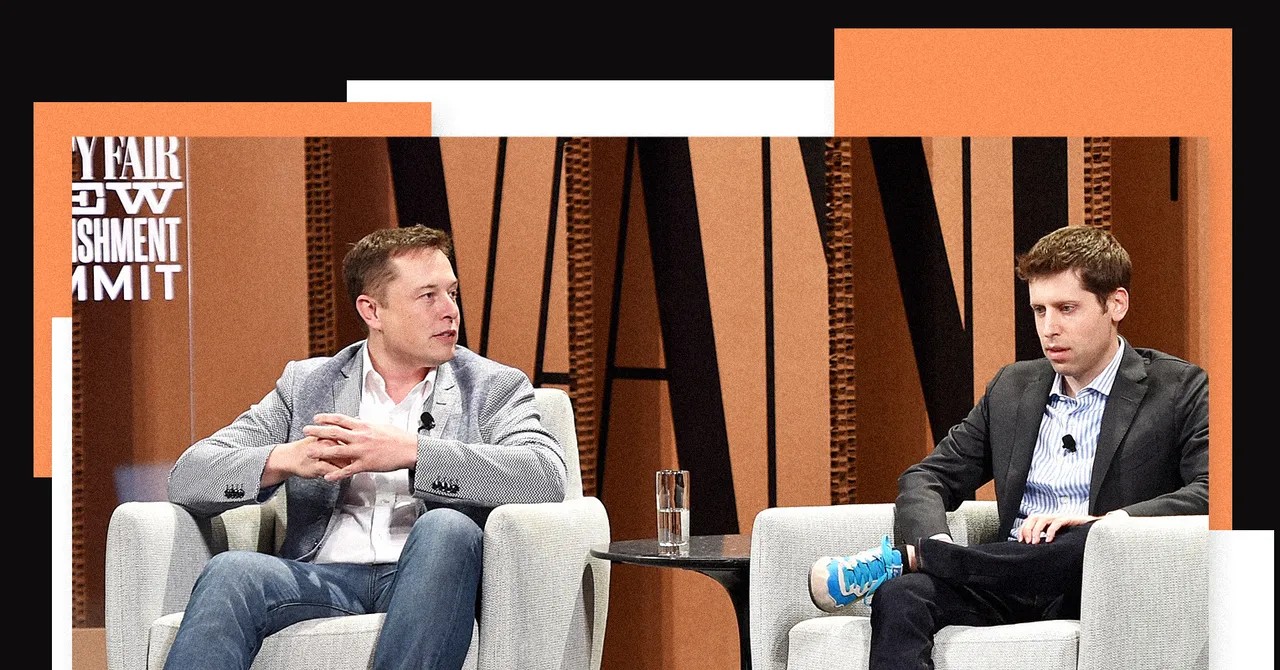
New evidence presented in the ongoing legal battle between Elon Musk and OpenAI suggests that Musk made significant, last-ditch efforts to absorb OpenAI’s leadership and technology into Tesla before his eventual departure from the nonprofit’s board. Emails and testimony revealed during the trial indicate that Musk attempted to recruit then-OpenAI CEO Sam Altman to lead a “world-class AI lab” within Tesla, offering him a seat on the Tesla board as part of the deal.
These revelations underscore the central tension in Musk’s lawsuit: his claim that Altman and former OpenAI president Greg Brockman diverted the nonprofit’s mission for personal gain, and OpenAI’s counter-argument that Musk’s actions were driven by a desire to control the organization he helped found.
The Proposal: Merging Leadership for Strategic Advantage
The core of the new evidence involves communications from 2017 and early 2018, a period when Musk was still on OpenAI’s board but increasingly at odds with the organization’s direction. According to emails and testimony from Shivon Zilis—a former OpenAI adviser, Tesla executive, and board member—Musk actively sought to integrate Altman into Tesla’s operations.
In a February 2018 text message, Zilis asked Altman, “Did you think through a B Corp subsidiary of Tesla?” This query was part of a broader strategy to position Tesla as a leading AI competitor, capable of rivaling Google DeepMind and Facebook AI Research. Internal Tesla documents from November 2017 reveal that the company was planning to announce the creation of this elite AI lab at the NeurIPS conference. The draft FAQ for the event explicitly noted that a major challenge was overcoming public perception that Musk’s AI efforts were tied exclusively to OpenAI.
The document listed potential leaders for the new unit, including Musk and Andrej Karpathy, a former OpenAI researcher who had recently joined Tesla. Notably, Altman’s name appeared next to Musk’s with two question marks, indicating uncertainty about his participation. Internal notes suggested that getting Altman to moderate the event could serve as a “forcing function” to commit him to the Tesla AI initiative.
Conflict Over Mission and Control
OpenAI’s legal team has used these documents to argue that Musk’s motivations were not purely altruistic. William Savitt, an attorney for OpenAI, stated outside the courthouse that the evidence shows Musk attempted to “corrupt OpenAI and absorb it into Tesla.” The implication is that Musk wanted Altman to abandon the nonprofit’s mission to benefit humanity in favor of joining a for-profit entity.
Musk’s lawsuit contends that Altman and Brockman effectively stole the nonprofit, leveraging Musk’s initial $38 million investment to build a private company now valued at over $800 billion. In contrast, OpenAI argues that Musk has harbored “sour grapes” since failing to secure full control in 2017, leading him to launch his own rival AI lab, xAI, in 2023.
Contradictions and Hidden Agendas
The trial has also highlighted discrepancies regarding the recruitment of key personnel. Zilis testified that Musk personally reached out to Karpathy to recruit him to Tesla, contradicting Musk’s earlier testimony that Karpathy left OpenAI voluntarily. Text messages from June 2017 show Zilis celebrating Karpathy’s hiring, noting that she had spoken to Greg Brockman, who “clearly had no idea” about the recruitment efforts. This suggests a coordinated effort to draw talent away from OpenAI without its leadership’s full awareness.
Furthermore, internal emails reveal discussions about “burying” OpenAI’s technology within Tesla for a “stealth advantage.” When pressed on whether this meant closing off source code, Zilis clarified that it was more about leveraging Tesla’s larger platform, describing OpenAI as a “small fish in a big pond.” This strategy aimed to create a counterbalance to Google DeepMind, with scenarios including Altman running the Tesla AI lab or recruiting DeepMind’s leader, Demis Hassabis, to join Tesla.
Personal Ties and Board Conflicts
Shivon Zilis’s role as a conduit between Musk and Altman adds a complex personal dimension to the corporate conflict. Zilis served on OpenAI’s board from 2020 until February 2023, despite having a confidential relationship with Musk and raising four of his children. She testified that she did not disclose this relationship to other board members due to a confidentiality agreement.
Zilis claimed she resigned from the board after Altman informed her of Musk’s launch of xAI, stating that there was “nothing to be done” when the father of her children started a competitive effort. However, text messages suggest she was aware of xAI’s development prior to Altman’s call, noting that Musk’s efforts had “become well known.”
Conclusion
The evidence presented in court paints a picture of intense maneuvering behind the scenes as Musk sought to align OpenAI’s resources with Tesla’s ambitions. Whether viewed as strategic innovation or corporate sabotage, these actions highlight the deep ideological and personal rifts that have defined the relationship between Musk and Altman. As the trial continues, these details will likely play a crucial role in determining whether Musk’s claims of mission drift hold weight or if they are seen as retrospective justifications for his competitive ventures.