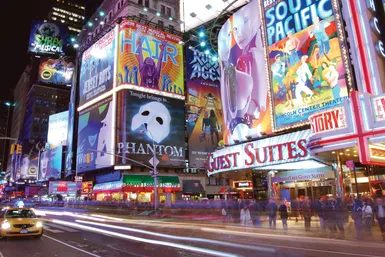
You are walking down the street in New York. The Broadway sign looms. Times Square sparkles with pulses of light. These are not just decorations. They are just the tip of a huge iceberg. Advertising is the driving force that drives the world today. It is very convincing. It informs. It sells.
Most people think of advertising as a product box. This is only half the story.
Advertising is a practice. It draws the audience’s attention to a product, service, idea or purpose. target? To get the answer. Maybe you buy a car. Maybe you voted for a candidate. Maybe you decided to drive safely. Techniques vary. The purpose remains the same.
How does the media manage with advertising revenue?
Why can we still watch free news on TV? Or can we read articles online without paying?
Let’s look at the balance sheet. In many countries, advertising is the main source of media revenue. newspaper. magazine. TV station. They depend on this cash flow. Without it, the business model collapses.
In the non-communist world, this is a huge service industry. It’s not just about putting a logo on a box. This time it’s about brand marketing. It’s all about strategy. It’s about creating a desire that wasn’t there 10 minutes ago.
The slow burn of print history
It didn’t start with Instagram influencers. It didn’t start with radio.
For most of human history, advertising has spread by word of mouth. Simple. Effective. Geographic restrictions apply.
Then came the printing press. Everything changed in the 15th and 16th centuries. Suddenly data is being copied. Mass production. It is shared.
In the 17th century, advertisements began to appear in weekly newspapers in London. This was the first step towards modern advertising. It flourished already in the 18th century. people read. people buy. The feedback loop is closed.
The birth of the office model
The 19th century brought big business. This requires extensive promotion.
The US is on top. An advertising agency was born here. But they were not what we know today.
The first agents were basically brokers. They sell space in newspapers. That’s it. They didn’t care about the news. They only care about a square inch of paper.
From space broker to strategic planner
This change happened at the beginning of the 20th century.
Agents are no longer just buying space. They start texting. They wrote the copy. They designed the artwork.
In the 1920s, this model was further developed. Agencies can plan and implement entire advertising campaigns. This is more than just an ad. It’s about the whole life cycle.
- Preliminary investigation.
- Copy preparation.
- Publishing in different media.
It becomes a whole process. It’s not just about buying ads. Start the campaign.
The TV revolution
Then a screen appeared. Television has completely changed the game.
Consider the DeSoto Safety Checklist ad. It aired in 1955. It was featured on the game show “You Bet Your Life” hosted by Groucho Marx. Announcer George Fenneman introduced this episode.
How advertising evolved from print to the airwaves
Advertising does not start with a strategy. It starts with space. In the late 1800s and early 1900s, this space was paper.
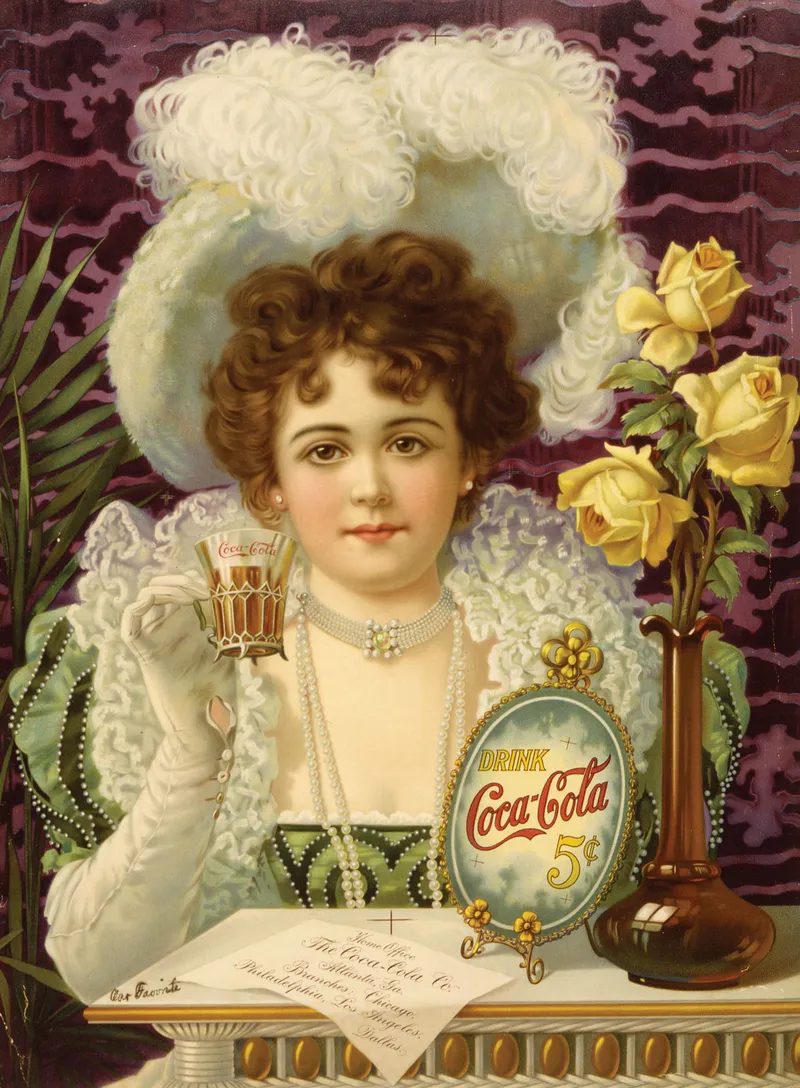
Take a look at a Coca-Cola ad from the 1890s. It’s very simple. It’s static. This is on the page next to the news. I hope you notice this when you read about local politics and weather. Newspapers were the first serious workhorse of marketers. Why? circulation. When you publish your product in a big city, thousands of people see your product every day. You can also change your ads. Did you spell the word wrong? Printed a bad color? You can take it out and print it again the next day. For early-stage brands trying to find their voice, this flexibility is a godsend.
Then there are magazines. If newspapers are grocery stores, magazines are specialty stores.
Segmentation is possible. Want to sell your high-end skis? Place an ad in Outdoor Sports Quarterly. Do you want to sell mainframe computers? Hit the tech journals. It’s not just about the reach; It’s all about relevance. Manufacturers of niche products finally have the opportunity to speak directly to the people most likely to buy their products. National magazines also started printing regional editions. This allows advertisers to target specific areas without spending money on an entire country. Before the word “precision” had a business meaning, had any business meaning.
But then the signal changed.
In the developed countries of the West, airwaves have become a new resource. Television and radio flourished as the most popular media of the 20th century. But they are not universal. In some countries, the state is ran the airwaves. Advertising is not allowed. Pure propaganda or public service. But in other countries, notably the US and the UK, advertisers can buy airtime.
They bought “spots.” Short bursts of time. Usually within 1 minute.
These spots do not appear out of nowhere. These are scheduled between or during normal programming. Advertisers can choose their slot. the broadcaster can decide. It’s a negotiation for attention.
For advertisers, the numbers on the screen dictated the cost. The two most important factors are:
- Number of viewers: How many people are watching? This determines the floor price. The bigger the crowd, the higher the bill.
- Audience Composition: Who are these people? This dictated timing. If your product is aimed at new parents, you’re not going to buy time during a late-night wrestling matches. You buy time when the demographic is awake and engaged.
This shift from print to air changed the economics of persuasion. You don’t just want someone to read your ad. You end up buying slice of their evening.
The long tail of physical advertising
Television and radio are not the only tools. The toolkit also extends to the physical world.
Direct mail arrived as a way to break through the noise. This is not mass broadcasting. The content is very detailed. Personalized. You can also send thick pamphlets, coupons, and handwritten notes. It’s expensive and time-consuming, but it feels more like a conversation than a shouting match.
Then there are the streets. Billboards. Poster.
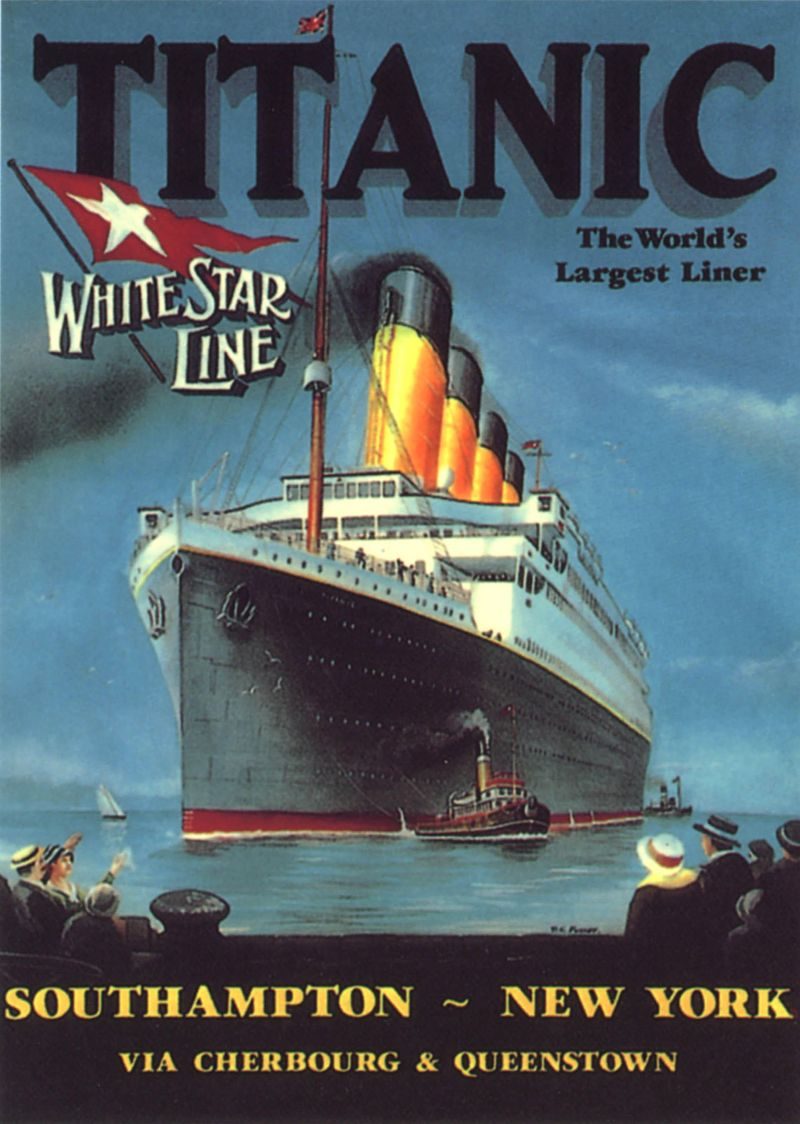
Remember the 1912 “Titanic” poster? It’s an ad. This is visual. If you walk in the city center it’s everywhere you look It doesn’t matter if you are interested in ships. it just wants you to notice
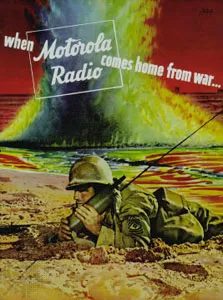
Transition from print to digital and the math of reach
In the 21st century, the consumer market is saturated. Advertisers need to cut through the noise and do this by embedding technology directly into the media. In 2009, Entertainment Weekly launched the world’s first in-magazine video advertising. They didn’t just slap a screen on the page. They included a battery-powered thin display that uses chip technology to store up to 40 minutes of video. Playback starts when you open the page. This was an early example of interactive advertising, predating today’s obsession with personalized digital feeds.
This development is in stark contrast to previous eras. Look at a 1965 TV spot featuring Jane Falkenberg promoting the Roper gas ranges. It is linear. Watch “The Adventures of Ozzie and Harriet” and when the show paused, you’ll see a product demo. The goal is mass exposure. The mechanism is simple. Get your message to as many people as possible during high-traffic windows.
How agencies decide who sees your messages
Today, this process less about brute force and more about precision. Campaigns that do not take into account public behavior and the operation of media channels will fail. This is where agencies come in. They develop sophisticated strategies based on two things: demographic analysis and consumer research.
The biggest challenge is the budget. Money is limited. A compromise must be made between frequency and reach.
- You can pay for millions of people to seen by millions of people, but they only see it once or twice.
- Or you can pay for a smaller target group to see your ad dozens of times.
This is the basic equation of advertising. It’s not just about creativity. It’s about scheduling. You place the message where your specific audience is already looking. If you sell luxury watches, do not blast the ad during children’s cartoons. Place it where high-income demographics spend their time.
Why data matters more than imagination
Creativity gets the attention. Data keeps the budget from burning. Agencies measure effectiveness through testing before committing to a full-scale launches. They keep track of which demographics respond and which ignore the message the message. Strategies are adjusted in real time.
The difference between a wasted budget and a profitable one often comes down to a choice between broad awareness and deep penetration. It’s rare to get both without an astronomical amount of money. Most campaigns fall somewhere in between, trying to balance the cost of reaching everyone with the cost of persuading a few.
The industry continues to change. Print has been replaced by digital. Digitization offers algorithmic positioning. But the problem is still the same. How do you ensure that the right message is shown to the right person at the right time? The tools change. The math does not.

A sign from 1999 telling children not to smoke now looks dated. The message is clear. However, the mechanism behind it is complex.
We are not going to discuss the basic functions of advertising. They inform. A free market economy depends on this visibility. If no one knows your product exists, no one will buy it. The company is dead. Simple survival logic.
Critics point to the price. Consumers are said to support advertising costs by raising store prices. The counterargument is volume. Mass marketing through advertising can reduce unit costs. Lower prices for end users. This is a trade-off between initial cost and long-term affordability.
Next, there are barriers to entry. Big campaigns cost a lot of money. Only companies with plenty of funds can afford national spots. This helps them control. The market is skewed.
Smaller players have options. They don’t need a Super Bowl berth to survive. Local advertising. Online targeting works. This gives niche brands hold their own against larger companies. The playing field is not level, but not completely locked either.
A bigger concern is editorial control. Advertisers pay for space. They affect the content. Are newspaper companies softening their stance because of advertising budgets? Do TV networks avoid controversial topics to satisfy sponsors?
This is a valid concern. However, this is not absolute. Media companies with deep pockets have influence. They rely on advertisers to pay their bills. But advertisers also rely on media for reach. When the integrity of a publication is compromised, readership declines. Fewer eyeballs mean less value for ad buyers.
Advertisers rely on the media to get their message across. If the media company’s integrity is compromised, it can lead to a decrease in audience for the advertising.
It’s a precarious balance. The power varies depending on who needs whom more. The sign from 1999 is gone. A discussion about influence is not.
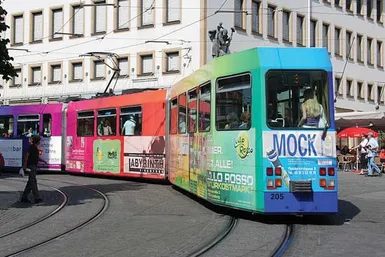
Wurzburg’s trams are more than just a way to get around the city. This is a rotating billboard.
Look at the side of that car. It’s covered in ads. full package. Bright colors. If you were standing on the platform, you would be staring at this visual noise. This is no accident by design. This is a well-planned operation by local transit authorities and advertisers who know exactly what they are doing.
German public transport has a special relationship with advertising. It’s not just about moving people from A to B. It’s also important to make money from a space that would otherwise just be empty metal. What about Wurzburg? This is a good example of how it works in practice.
The economics of trams
Why are there so many ads on these vehicles? Because they support the cost of the trip.
Think about it. Tickets cost money. However, the price of advertising space is high. Transport authorities save money when companies pay for that wrap. A significant reduction in ticket prices may not be enough. But it’s enough to keep the lights on. Or fix the track. Or buy a newer, quieter tram.
It’s a trade-off. You get a cleaner in exchange for a cleaner and more reliable service. Most riders accept this. They’ve been watching it for years. It’s just part of the cityscape.
Where the money goes
The ads you see are not random. They are being targeted.
Trams in Wurzburg don’t just go everywhere. It stays within the city limits. to a large extent. Follow the predetermined course. This means your audience is predictable. local people. Tourists. Commuters.
Advertisers pay for this visibility. They don’t just pay for paint. They pay for this route. If you work in the city center, you will see these ads every day. On the way to work. On the way home. Repetition builds recognition. This is old-fashioned psychology.
“Public transport advertising turns the public good into a source of income without raising fares.”
This model works because the barrier to entry is low. You don’t need a personal vehicle. All you need is a ticket. Advertising revenue helps stabilize ticket prices. Inflation has serious effects everywhere. However, agencies have this one lever: space.
The visual clutter debate
Not everyone likes it.
Some complain about the clutter. It’s distracting. It makes the city look busy. Or cheap. There is an opinion that public spaces should be clean. Minimalist. A place for art, not sales.
But then you look at the alternative. Ticket prices are rising. Fewer trams. Slower service. You often have to choose between a busy visual environment and an unreliable service. Most cities choose advertising.
Wurzburg is no exception. Trams run on time. Ads are everywhere. The system works. That’s the deal.
How it affects your wallet
You might think these ads don’t affect you. They’re wrong.
Every euro earned from the advertising package does not come from your pocket. indirectly. directly. It’s a subsidy. It’s small. But it adds up across a fleet of dozens of trams.
If Wurzburg were to remove advertising tomorrow, the numbers would come from somewhere. Fares would likely go up. or service time