


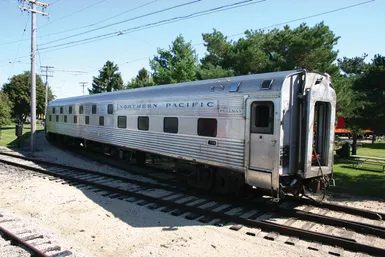
The Northern Pacific Railway wasn’t just another line on a map. It was a massive, rugged artery of the American West. For a century, it stretched from St. Paul, Minnesota, to Seattle, Washington. It moved timber, grain, and people across some of the harshest terrain on the continent. Then, in 1970, it disappeared. It merged into the Burlington Northern. Now, it’s mostly history books and museum cars.
But the story of how it got built is a cautionary tale about money, risk, and ambition. It started with a promise.
The 40 Million Acre Bet
Congress chartered the Northern Pacific in 1864. The goal was simple. Build a transcontinental railroad. Connect Lake Superior to the Pacific Ocean. In exchange, they got a land grant of 40 million acres. That is 16.2 million hectares of mostly empty, wild land.
The logic was sound. The government would give away the land to subsidize construction. The railroad would sell the land to settlers to raise cash. It sounded like a win-win.
It wasn’t.
The problem was the wilderness. It was mostly unsettled. There were no towns to sell to. There were no immediate returns. Investors sat on their hands. They looked at the mountains, the valleys, and the sheer cost of laying steel through nowhere. They got nervous.
Enter Jay Cooke.
The Cooke Crash
Jay Cooke was a Philadelphia banker with a reputation for aggressive financing. He believed in the Northern Pacific. He decided to raise $100 million for the project. That was a staggering amount of money in the 1870s.
The railroad pushed west. It reached Bismarck, in the Dakota Territory. Construction was moving. Progress was visible.
Then, everything broke.
In 1873, Cooke’s bank collapsed. It was part of a larger financial panic. The Northern Pacific ran out of cash overnight. It went into receivership. Construction stopped.
For six years, the tracks ended at Bismarck. The line sat idle. It was a ghost of a railroad.
Villard Takes Over
The railroad didn’t die. It just waited.
In 1878, a new player emerged. Henry Villard took over the reins. He wasn’t a speculator like Cooke. He was an operator. He knew how to build.
Villard pushed the line westward. He reached Helena in the Montana Territory. From there, he linked up with the Oregon Railway. In 1883, the line finally hit Seattle in Washington Territory.
The transcontinental route was open. It was complete. But the financial scars remained.
The Battle for Control
The 1890s brought new trouble. The Northern Pacific faced financial difficulties again. This time, J.P. Morgan stepped in. He reorganized the company.
Morgan didn’t act alone. He shared control with James J. Hill. Hill owned the Great Northern Railway. It was a direct competitor. Hill was a titan of the industry. He wanted more power.
He proposed a merger. He wanted to combine the Northern Pacific, the Great Northern, and the Chicago, Burlington and Quincy Railroad. He created the Northern Securities Company to handle it. Hill was named president.


