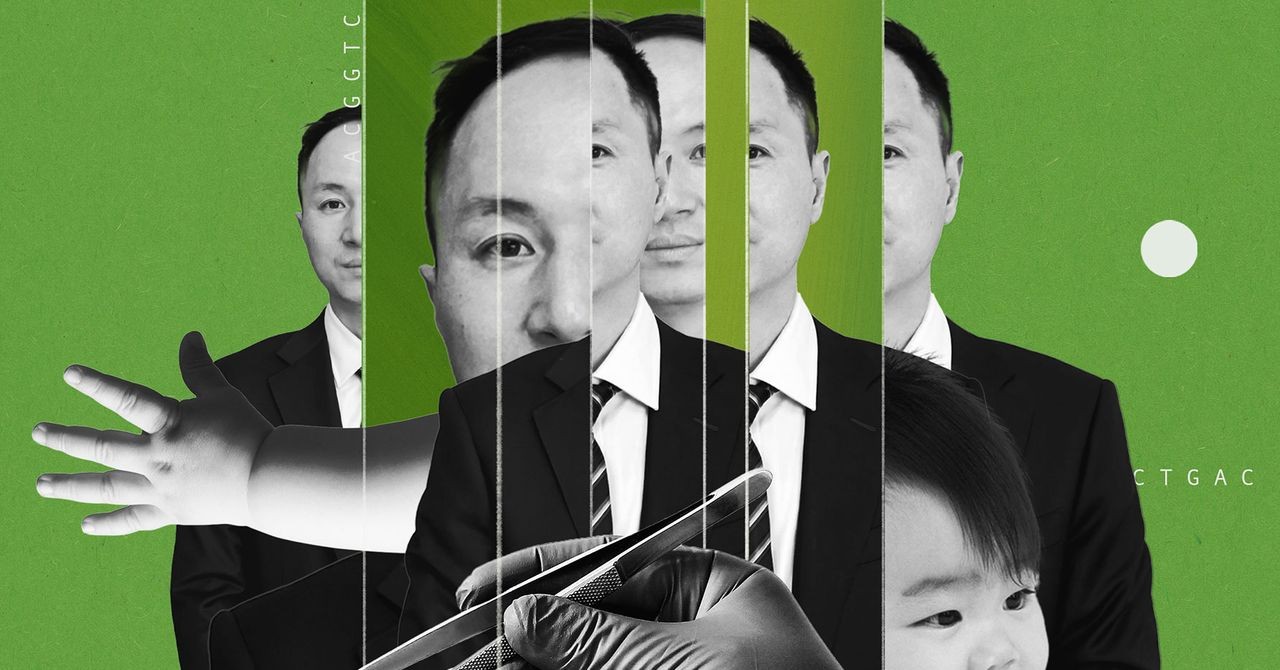
He Jiankui, the Chinese scientist who shocked the world in 2018 by announcing the birth of the first gene-edited babies, is undeterred. After serving a three-year prison sentence for his unauthorized experiments, he is now openly pursuing new research aimed at altering human embryos—this time targeting Alzheimer’s prevention.
In 2018, He revealed he had modified the genomes of three girls to resist HIV infection, a permanent change heritable to future generations. China banned reproductive genome editing in response, but He is already working around these restrictions.
He now operates an independent lab in Beijing, where he claims to be conducting early-stage research on preventing Alzheimer’s through gene editing. He aims to introduce the APP-A673T mutation, found in Icelanders, which appears to provide resistance to the disease. He has also openly discussed the possibility of editing embryos to prevent other conditions, stating he wants to move toward “hundreds of gene-edited babies.”
Funding and Future Plans
He’s lab has already secured $7 million in funding from undisclosed donors—including an entrepreneur with a family history of a separate disease he refuses to name—and he is seeking an additional $10 million to accelerate his research. He has ruled out government funding.
With China’s restrictions in place, He is exploring alternative locations, including South Africa, which recently amended its ethical guidelines to allow for potential heritable genome editing. He has already contacted South African researchers about conducting clinical trials there.
Ethics and Controversy
He dismisses concerns about ethical boundaries, referring to himself as “Chinese Darwin,” “Oppenheimer in China,” and “China’s Frankenstein” on social media. He rejects criticism of his work by arguing that the health of the patient is the only relevant metric.
He sharply criticizes attempts to enhance human IQ through embryo editing, calling it a “Nazi eugenic experiment.” However, he defends his own work as disease prevention, not enhancement.
The Long-Term Vision
He envisions a future where multiple genetic edits could prevent cancer, cardiovascular disease, and HIV in addition to Alzheimer’s, potentially extending human lifespans. He estimates he is two years away from attempting to create Alzheimer’s-resistant babies, pending regulatory approval elsewhere.
He Jiankui’s relentless pursuit of germline editing, despite legal and ethical barriers, raises serious questions about the future of human genetic modification. His willingness to operate outside established norms suggests that despite global prohibitions, the era of designer babies may not be over.