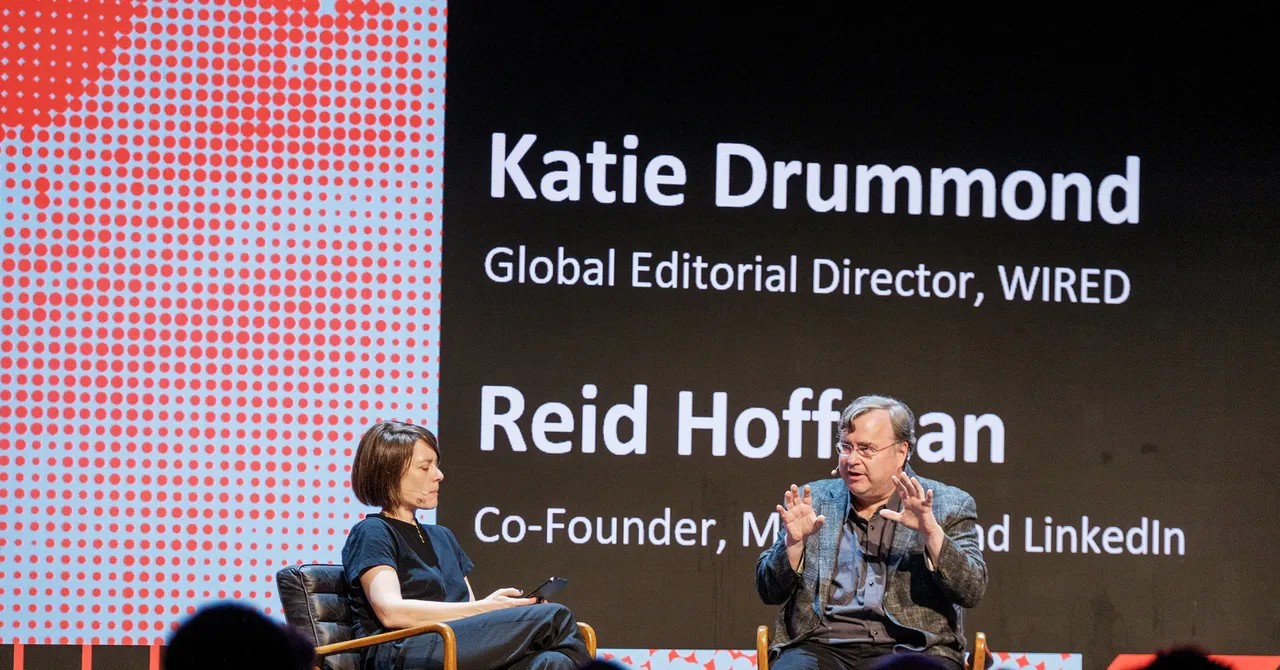
Reid Hoffman, the LinkedIn co-founder and Silicon Valley veteran, has issued a stark warning to the medical community: failing to use advanced AI as a second opinion may soon constitute medical malpractice.
Speaking at WIRED Health in London, Hoffman argued that frontier large language models (LLMs)—the most sophisticated AI systems currently available from companies like OpenAI and Anthropic—possess a breadth of knowledge that no human doctor can match. He believes these tools are essential not just for drug discovery, but for clinical decision-making and patient care.
The Case for the AI “Second Opinion”
Hoffman’s stance is rooted in the sheer volume of data these models have processed. While many frontier models are not specifically trained exclusively on medical texts, they have ingested trillions of words of information, including scientific literature, case studies, and historical data.
“If as a doctor, you’re not using one or more frontier models as a second opinion, my belief is you’re bordering on committing malpractice,” Hoffman stated. “These AI systems… are bringing superpowers that no human being has.”
This perspective challenges the traditional view of AI in healthcare. Rather than replacing doctors, Hoffman envisions AI as a critical check against human error. He personally uses these models to review his own health issues and notes that his personal concierge doctors do the same. The goal is not to outsource critical thinking, but to prevent misdiagnosis by cross-referencing a doctor’s assessment with an AI’s analysis.
Why this matters:
* Safety Net: Human doctors, despite their expertise, are prone to cognitive biases and fatigue. An AI second opinion can flag anomalies or alternative diagnoses that might otherwise be overlooked.
* The Risk of Inaccuracy: Critics point out that LLMs can hallucinate or provide inconsistent advice. Hoffman acknowledges this but argues that the risk of not using the tool is greater than the risk of its occasional errors, provided the doctor retains final judgment.
AI as a Triage Tool for Overburdened Systems
Hoffman’s advocacy extends beyond individual consultations to systemic healthcare challenges. He points to the UK’s National Health Service (NHS), which is currently grappling with massive waiting lists and a severe shortage of family doctors.
In this context, Hoffman suggests that every smartphone should host a free, AI-powered medical assistant. This tool could serve two primary functions:
1. Early Triage: Helping patients determine the urgency of their symptoms before booking an appointment.
2. Accessibility: Providing immediate, albeit preliminary, guidance to populations that lack easy access to primary care.
“We just don’t have enough doctors, most people don’t have access,” Hoffman explained. “When you think about, ‘How should the NHS be redesigned?’ everyone should be interacting with this medical assistant.”
Beyond Clinical Care: Drug Discovery and Regulation
While Hoffman is passionate about clinical applications, his current business venture, Manas AI, is focused on accelerating drug discovery. Co-founded with renowned cancer physician Siddhartha Mukherjee, Manas AI aims to compress the traditional decade-long drug development process into just a few years.
The company’s AI engine identifies potential drug targets for various cancers. However, Hoffman emphasizes that human judgment remains central to the process. Mukherjee personally reviews the AI’s proposals, filtering out what Hoffman describes as “bonkers stupid” ideas from genuinely promising candidates.
Hoffman also envisions a future where AI assists regulatory bodies like the FDA. He imagines a scenario where regulators use biological models to assess emerging medicines more quickly, potentially fast-tracking drugs with a lower likelihood of negative consequences. While he admits this is not an immediate reality, he sees it as a logical next step for improving public health outcomes.
The Broader Implications
Hoffman’s vision suggests a future where AI is deeply integrated into every layer of healthcare:
* For Doctors: A mandatory second opinion tool to reduce errors.
* For Patients: An accessible triage assistant to navigate complex healthcare systems.
* For Pharma: A powerful engine to discover treatments for both common and rare diseases more efficiently.
However, this rapid integration raises significant questions about liability, privacy, and the potential for over-reliance on automated systems. As AI becomes more prevalent, the medical community must balance the efficiency and breadth of machine intelligence with the nuanced, empathetic judgment of human care.
In conclusion, Reid Hoffman argues that the era of ignoring AI in medicine is ending. Whether viewed as a revolutionary tool or a risky experiment, the integration of AI into healthcare is no longer optional—it is becoming a standard of care that could redefine how we diagnose, treat, and develop medicines.