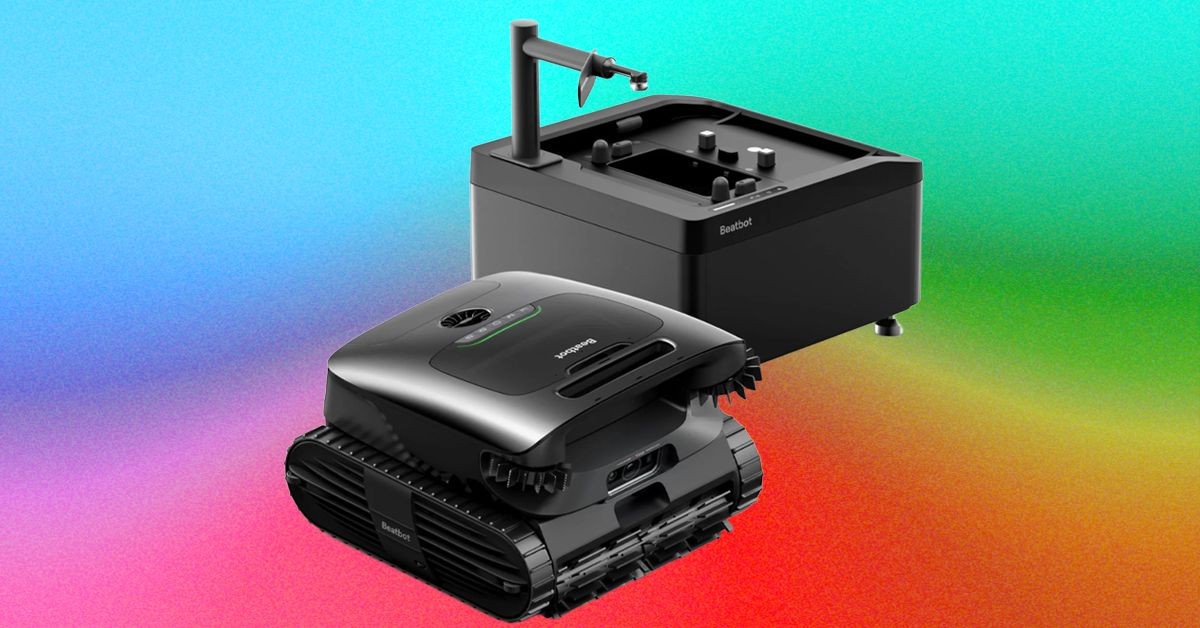
So. You bought a pool robot. Great. It scrubs the algae, the dirt, the silt. Then it stops working. Because its filter is full. Of mud.
Who cleans the filter?
You do.
It is the great unspoken burden of robotic pool cleaning. Like your Roomba, it sucks up the mess and holds onto it until you decide to dump it out. Usually that means a smelly bucket, wet leaves sticking to your hands, and a filter basket that looks like a compost bin. Manufacturers have promised self-cleaning magic for years. They showed prototypes at trade shows. They made noise. Then they went quiet.
Beatbot finally delivered the AquaSense X.
Sort of.
Enter The Beast
The robot itself doesn’t clean itself. It needs a butler. Meet the AstroRinse.
It is heavy. Like, 42-pound, industrial-printer, “did this come from a hardware store” heavy. It sits on your deck. The robot sits on top of it. The station washes the robot and charges it simultaneously.
You have to build it.
If you hate screws, you are going to hate this box. The “quick start” guide is a 16-step gauntlet. I spent half an hour wrestling with hex nuts and telescoping arms.
- Attach the cleaning arm to the chassis.
- Hook up a water inlet hose (only 12 feet long? Really?).
- Connect a drain line.
- Plug it in.
- Make it level.
You need power, water, and drainage within a 12-foot radius of the hose spigot. If you don’t? Extension cords. And frustration.
The biggest logistical headache isn’t the setup. It is the geography. The robot weighs 29 pounds. Wet. It is heavier when full of water. You have to lift the beast out of the pool, haul it across your yard to where you placed the washing machine, and put it back. If your outlet and spigot are far from the pool, you are doing heavy labor twice a week.
The distance from the pool to the AstroRinse becomes the new filter.
Same Old Robot, New Tricks
The AquaSense X looks almost identical to its predecessor, the AquaSense 2 Ultra, except for a slightly redesigned basket. One piece instead of two. Less clicking around, slightly better fit.
Setting up the robot is easier. Click in the side brushes. Put it on the AstroRinse base. Press buttons to pair them via Wi-Fi. Done.
Until the firmware updates break the connection. Which it did. I had to redo the pairing. A minor hiccup.
Performance? Indistinguishable from the previous model.
On the pool floor, it is a monster. It grabbed 97 percent of the debris in my tests. Synthetic mulch? Gone. Leaves? Gone. Steps? Handled with grace.
On the surface? Awful.
It collected less than half the floating leaves. It sank most of the rest. The spinning side brushes try to help, but the robot just moves too slow for floating garbage. It’s not a surface cleaner. Don’t expect it to be.
The battery is the same 13,40 mAh unit from before. You get about 4.5 hours of run time. That’s enough.
The Wash Cycle
Here is why you bought it.
Lug the heavy robot to the station. Drop it on top.
Wait a few seconds. The AstroRinse recognizes it. The telescoping arm swings down. It jams a nozzle into the robot’s filter mouth. Then—blare.
High-pressure water blasts the filter basket from the outside in. It sounds like a jet engine starting up. For three minutes. (One minute if you are in a hurry and like dirty robots).
Then it stops. The arm retracts. You are done.
Well. Mostly done.
It didn’t clean everything.
Never 100 percent. A handful of stubborn leaves always remained. You still have to reach into the robot and pull them out. It saves the scrubbing. Not the fishing.
The debris drops into a 22-liter bin at the base of the station. Beatbot claims you empty that every two months.
Let’s be honest.
Wet leaves rot. Rotting leaves smell. And wet, stagnant bins? They breed mosquitoes. I watched the water pool under the unit for days. Unless you open the hatch and dry it out—and clean the bag while you’re at it—it becomes a swamp. 🦟
Is It Worth It?
Beatbot solved a puzzle everyone else ignored. But did they make your life better?
I’m not sure.
Cleaning the old filter basket took two minutes. Hauling the new robot to a dedicated cleaning station took five minutes of lifting plus two minutes of setup. Then you deal with the mosquito bin maintenance every week.
You save some manual scrubbing. You lose convenience in weight and logistics.
It is a marvel of engineering. A complicated, loud, heavy marvel. But I am still calculating if the convenience is worth the extra weight I have to carry.
The industry moved forward. The robot cleaned itself.
I’m still cleaning the backyard.