You look at a car rolling off the assembly line and you see the finished product. It’s easy to forget the invisible machinery that made it possible. Production systems do not only apply to factories. These are the methods by which industry transforms raw materials into goods and services. Think of them as change processes. You invest work, money and materials. You will receive a useful item.
The basics haven’t changed, even though the tools have. Economists call inputs “factors of production.” These include labor, capital and land. Production managers might call them “the five M’s”: men, machines, methods, materials and money. It’s the same list. Just different jargon.
How resources become output
The production system is defined by the flow. Physical things go through the process. Raw materials become work in progress. Then they become finished products. Information moves with them. Paperwork, data, and signals accompany, data and signals. This flow has limits. The capacity of the system determines how much can be produced. If the machinery is slow, the output suffers.
But capacity is only half the battle. Quality is another frontier. You can produce a thousand units fast. If they are broken, you have zero value. Quality also includes appearance. This also includes durability. It covers the performance characteristics. It also involves timeliness. Did it arrive when promised? Is the documentation correct? A system is defined by its ability to meet these standards. How production systems manage information flows is as important as moving steel or plastic.
Three production types
Not all industries work the same way. There are three general types of basic production systems. Each has different trade-offs for cost, flexibility, and speed.
Batch system
In a batch system, you use general-purpose equipment. You produce small quantities. The specifications vary from batch to batch. A fixed amount of product goes through one or more stages. at the end of the cycle, it comes out all at once. This is often called a job shop.
Consider a special machine tool. Or heavy construction machinery. You don’t make ten thousand identical units. You make a specific run. The same logic applies to specialty chemicals. Or processed foods. Works even in services. The insurance company processes claims in a batch process. A number of requirements are being processed. Then another.
Continuous system
That’s the other extreme. Continuous systems work without interruption. The product goes through the process as a steady stream. Consider oil refining. Or paper manufacturing. The equipment is specialized. It’s designed for one thing. Flexibility is low. But the efficiency is high. They produce large quantities. The unit price drops considerably. The setup is expensive. But the operating costs are minimal.
Project system
The projects are unique. You’re building a big thing. Or you are performing a complex task. Bridge. Skyscraper. Software implementation. The resources are mobilized for the duration. Then they disperse. There is no second batch. No continuous stream. Just a single, large undertaking. Planning is complicated. The risk is high. If you fail, you fail completely.
Why the Type Matters
Choosing a system is a financial decision. It has a direct impact on your bottom line. Batch systems offer flexibility. You can easily change products. But you pay for downtime. Installation costs reduce margins. Continuous systems offer scalability. But you’re stuck. When demand drops, you’re stuck with high fixed costs. Project systems offer high value per unit. However, the cash flow is irregular. You spend a lot up front. You will be paid later.
It is the manager’s job to balance these constraints. Capacity limits output. Quality limits acceptance. Information flow limits coordination. Ignore any of these, and the system fails. It’s not about working harder. It’s about understanding the mechanics. The car on the line didn’t appear by magic. It was the result of a calculated transformation. A series of decisions made under pressure.
What happens when the market changes? When is the batch you made no longer needed? The system must adapt. Or it will break. This is a constant tension in production.

Mechanisms of continuous production
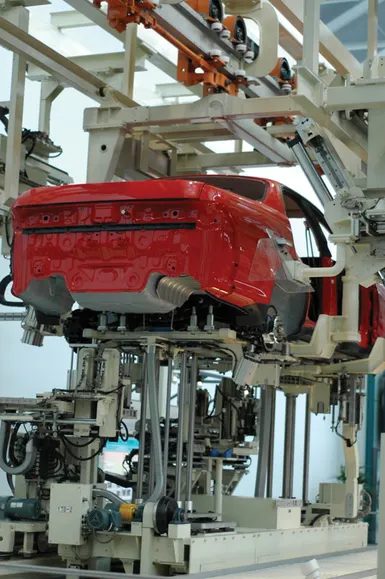
Continuous production is not just a method; It’s an industrial reflex. Goods move in a fixed sequence of steps that is identical for each unit because efficiency requires uniformity. The goal is volume. Massive throughput requires specialized equipment and rigorous methods designed to reduce unit costs.
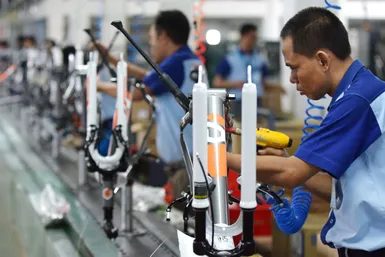
Workers don’t build everything. They handle micro-segments of the process. These tasks are narrow, easy to complete and repeatable. Think of a car engine assembly line. Or the final assembly of consumer electronics: televisions, washing machines, personal computers. The complexity of the product does not matter. The simplicity of the task is everything.
This setup – often referred to as an assembly line system – is the backbone of mass production. It trades flexibility for speed. You get lower costs. You get higher output. You don’t get variety. The system only works if every step, every machine, every worker remains perfectly synchronized. Break this rhythm and the whole line stops.
Project-based production: a one-off approach
Batch and continuous operations often share the same floor, but represent only two areas of the operational domain. See Integrated Circuit Manufacturing. It starts with a batch process. Thousands of small circuits are etched onto large silicon wafers at the same time. These wafers go through dozens, sometimes hundreds of different processing steps. Only when this massive parallel work is completed will the individual circuits be cut apart. Then the continuous line takes over. Each microchip, only a few millimeters in size, is assembled with other components to form the final electronic device.
It is a hybrid model. Efficient for large quantities, precise in execution.
But not everything fits in one batch or one stream. Some things are unique. Unrepeatable.
Managing the One-Off
The third major production system is the project or “one-off” approach. You’re not making ten thousand units here. You make one. One building. One ship. A prototype for a new aircraft or a huge computer system.
Resources do not flow continuously. They don’t sit in a queue. They are collected specifically for this one goal, run once, and then distributed.
This creates a unique management problem. Since the product is unique, you cannot rely on the efficiencies of repetition. There is no learning curve that smooths out the rough edges over time. There is no standard cycle to optimize.
So how do you keep costs from skyrocketing?
Special management methods have been developed to curb these costs. The goal is not just to finish the project; The purpose is to complete it with reasonable financial constraints. Without these controls, the lack of repeatability becomes a liability rather than a feature.
The Scale of the Vehicle Assembly Building
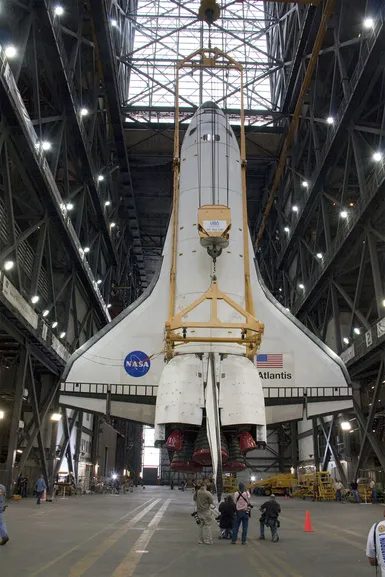
The Vehicle Assembly Building (VAB) at Florida’s Kennedy Space Center is so large that it’s hard not to see it in person. It is one of the largest structures on the planet, with an interior space of approximately 3.7 million cubic meters. That’s about 130 million cubic feet. The building was originally designed for the large Apollo-Saturn V rockets, but was later modified.
It is currently the base of the Space Shuttle fleet.
Once inside, you can see the shuttle Atlantis suspended in the air. This is before the final integration.
The orbiter is suspended there, awaiting connection to the external fuel tank and solid-fuel rocket boosters. Only then is it ready for flight.
The design behind this facility not just about height. It’s a about precision.
VAB provides a controlled environment that allows precise assembly without the influence of weather. Wind, humidity and temperature fluctuations are all under control. For tasks that require millimeter-perfect alignment, that control is everything.
In building design, stability and environmental management take priority over bulk.
Today, VAB is a monument to industrial ambition. It’s not just a rocket garage anymore. It’s a workspace where history is assembled, piece by piece before heading into the unknown.